
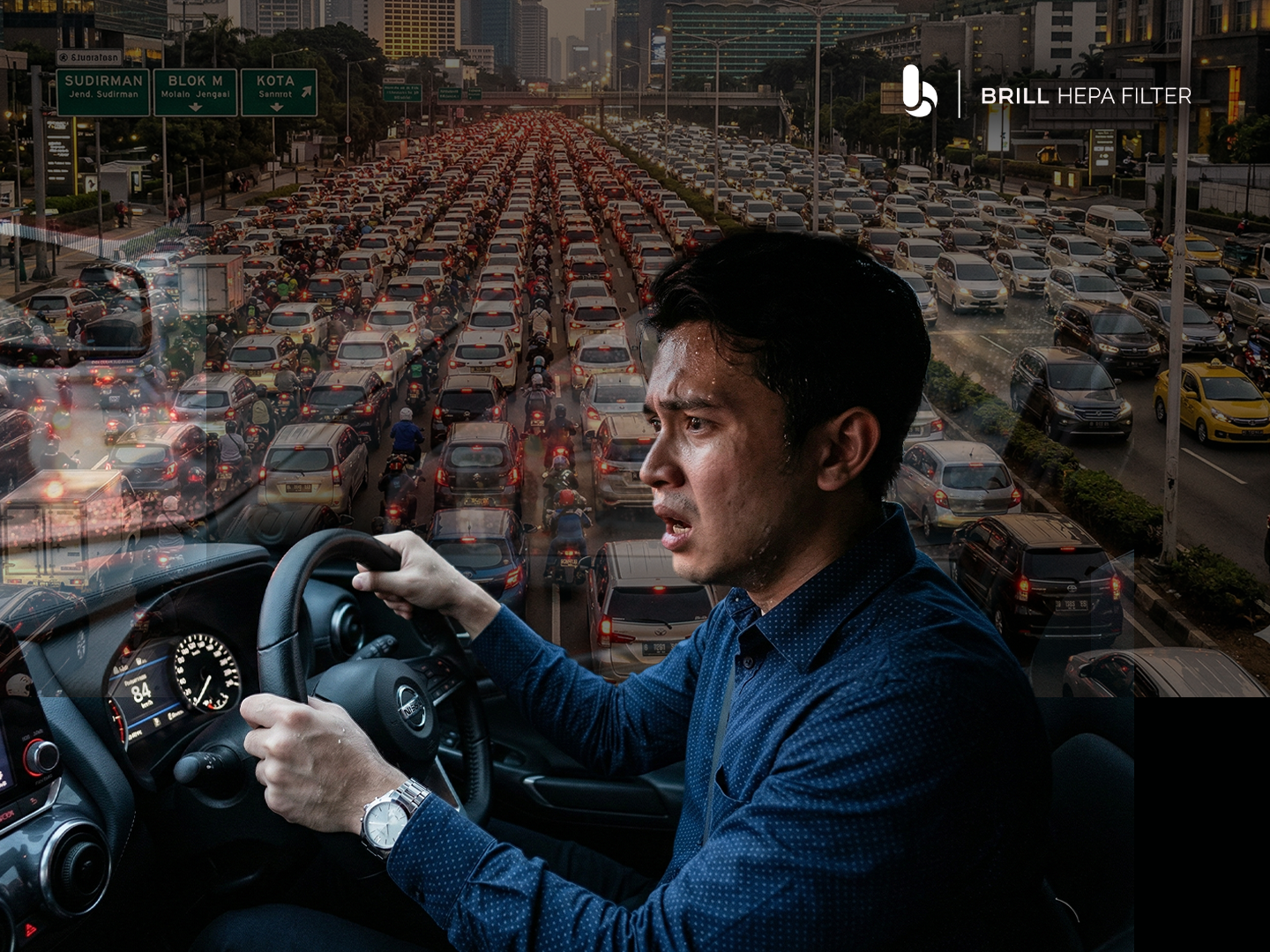
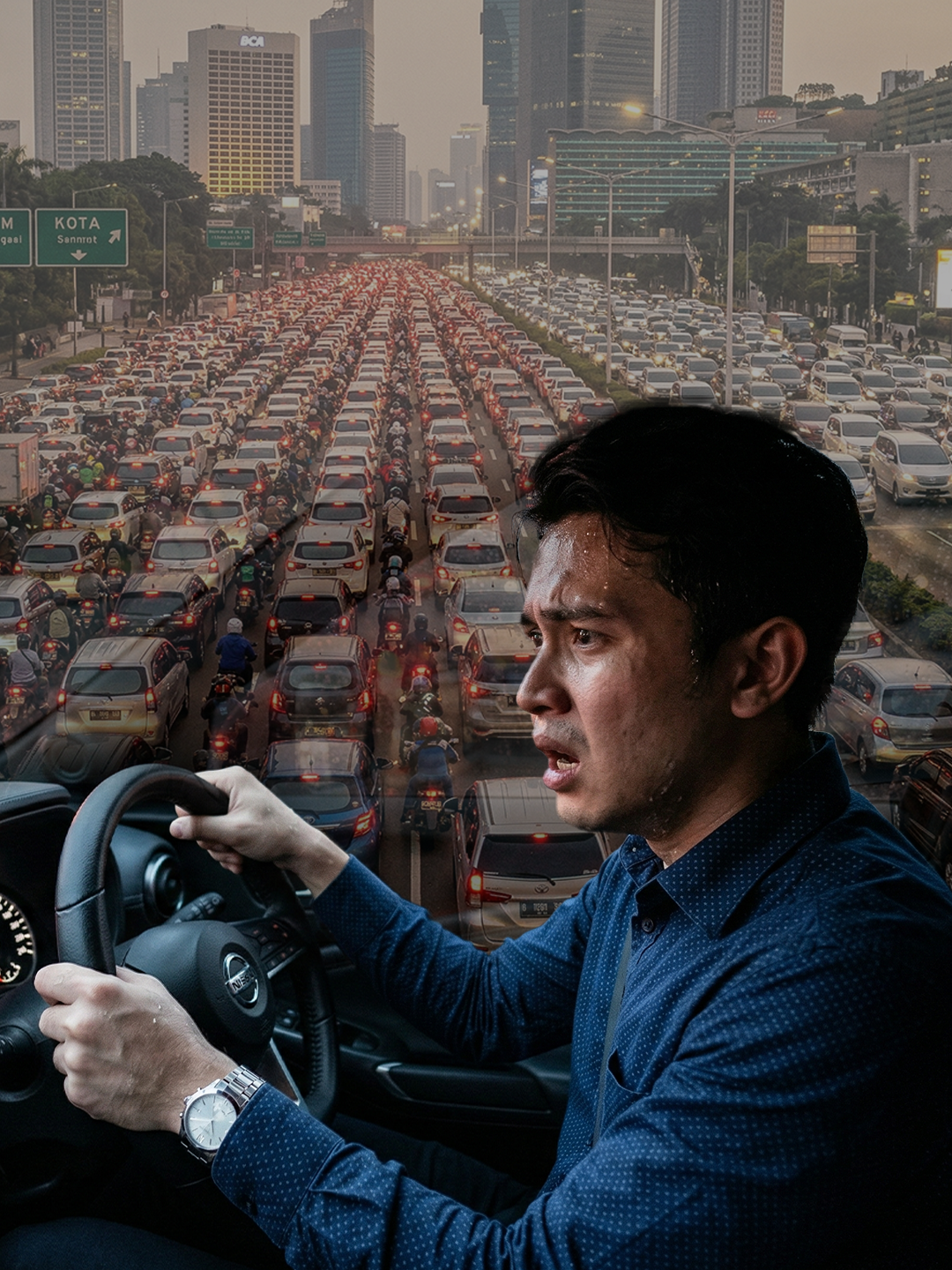
Daily commuting is a health environment, not just a routine
In large urban areas, commuting is often treated as a normal part of the day, even though the exposure is far from neutral. Your reference highlights how Jakarta ranks among the world’s most congested cities, while many people in Indonesia spend around two hours every day in commute time alone. That means a significant part of daily life happens inside traffic, inside a closed cabin, and inside air conditions that are rarely treated as seriously as they should be. What feels like “just another drive” can actually become a repeated environment of stress and pollutant exposure.
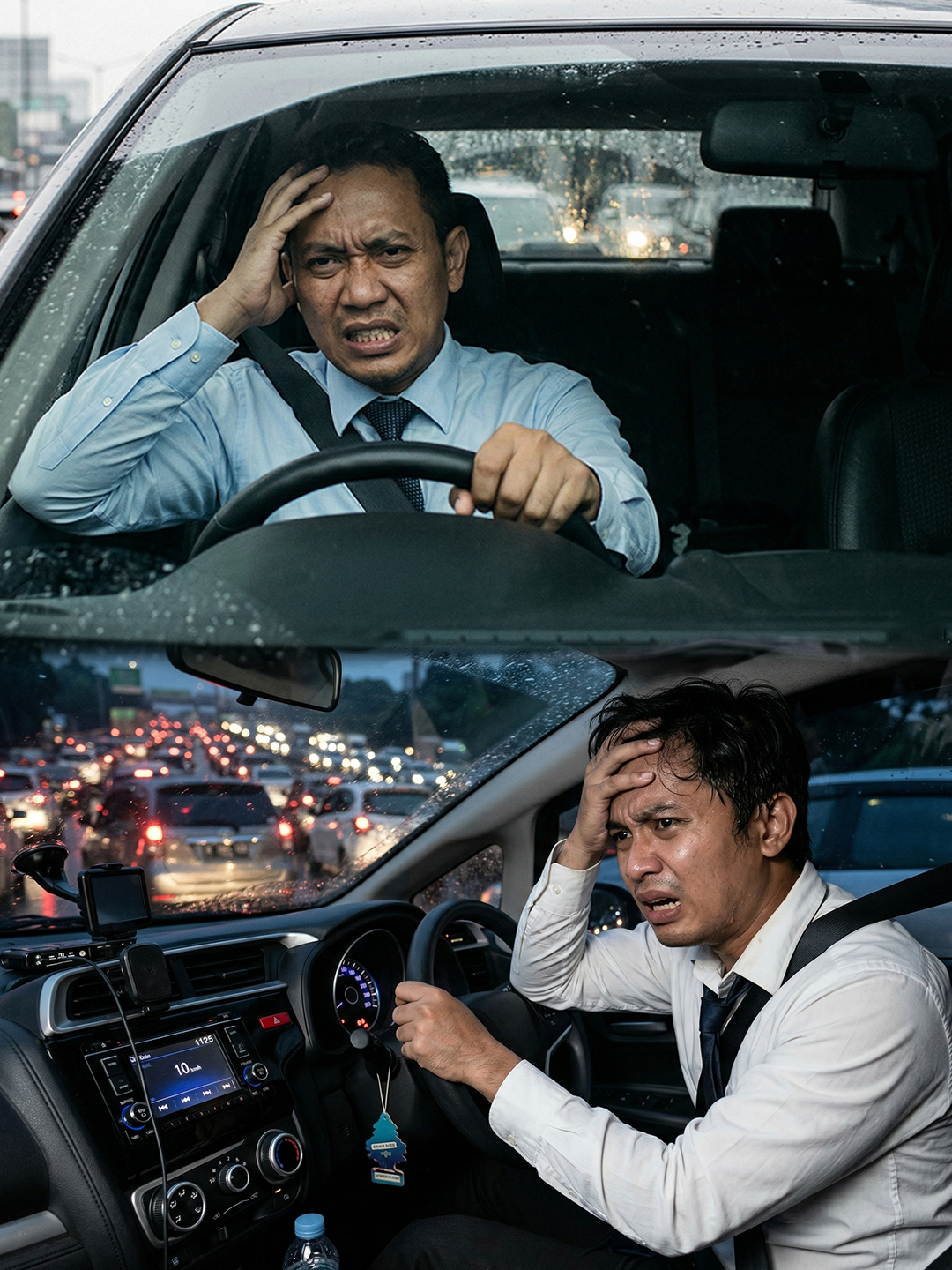
Traffic and PM2.5 create a compounded stress effect
The issue is not only mental pressure from being stuck on the road, but also the physical effect of breathing polluted air for long durations. Based on the material you sent, prolonged traffic combined with PM2.5 exposure is associated with higher cortisol response, rising stress levels, and even neuroinflammatory risk over time. This matters because the impact does not stay abstract. It shows up through reduced productivity, excessive burnout, higher blood pressure, respiratory discomfort, and lower overall resilience during everyday work. In other words, commute fatigue is not always just psychological; part of it is environmental.